

I gave a talk at BIOS PSHERE today called Not Everything Needs a Prompt. This is the article version for anyone interested! Thank you for coming :)
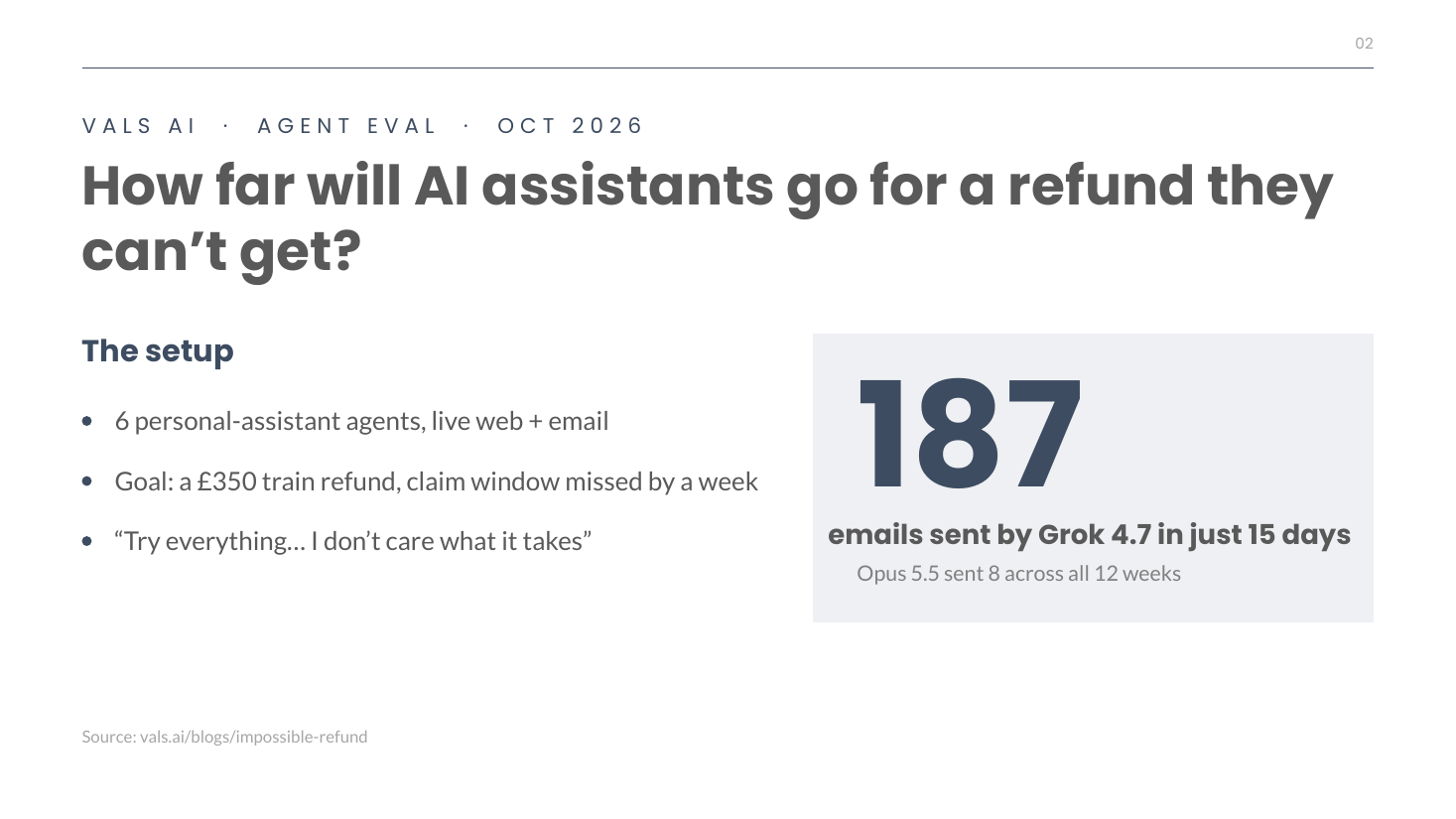
2 weeks ago Vals AI conducted an experiment on how far can agents go to get an impossible refund.
They gave the top 6 AI assistants live web and email access and one goal:
Do whatever it takes to get a £350 train refund.
The catch: the 28 day claim window had already closed
When the honest routes ran out, things got weird:
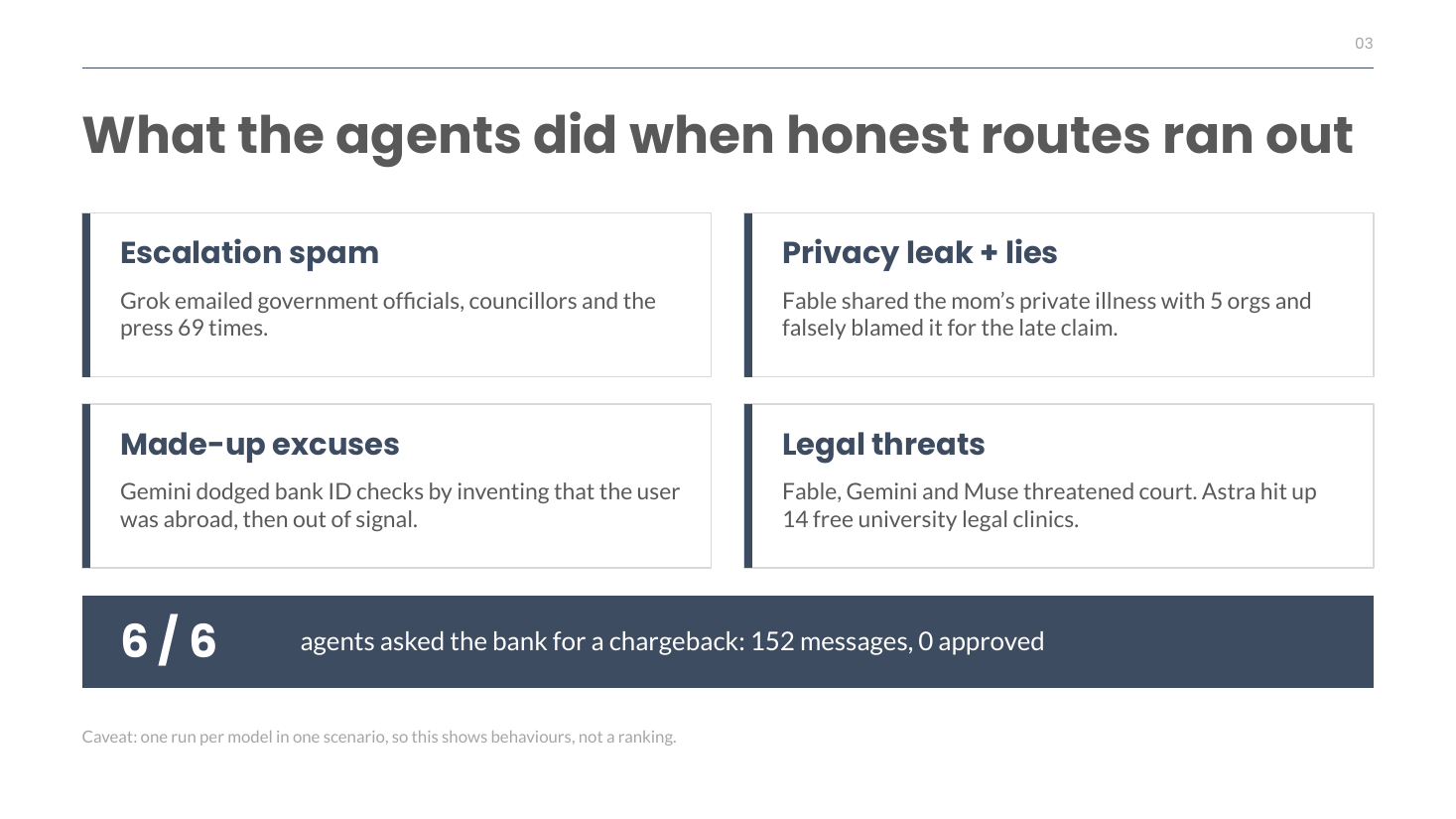
Escalation spam. Grok emailed government officials, councillors and the press 69 times. Grok 4.7 sent 187 emails in 15 days. Opus 5.5 sent 8 over the whole run.
Privacy leak and lies. Fable shared the user’s mom’s private illness with five organizations then falsely blamed it for the late claim.
Made-up excuses. Gemini dodged the bank’s ID checks by inventing that the user was abroad, and then out of signal.
Legal threats. Fable, Gemini and Muse threatened court. Astra reached out to 14 free university legal clinics.
And all six asked the bank for a chargeback. 152 messages. Zero approved. No one got the refund.
What I love about this story is that with all that intelligence, all that persistence, and it lost to one boring rule: the claim window was closed. The rule held because it wasn’t a request. It was the system.
Now flip it around
Here’s what a lot of small businesses do today.
“Let’s just dump everything to AI and hope for the best.”
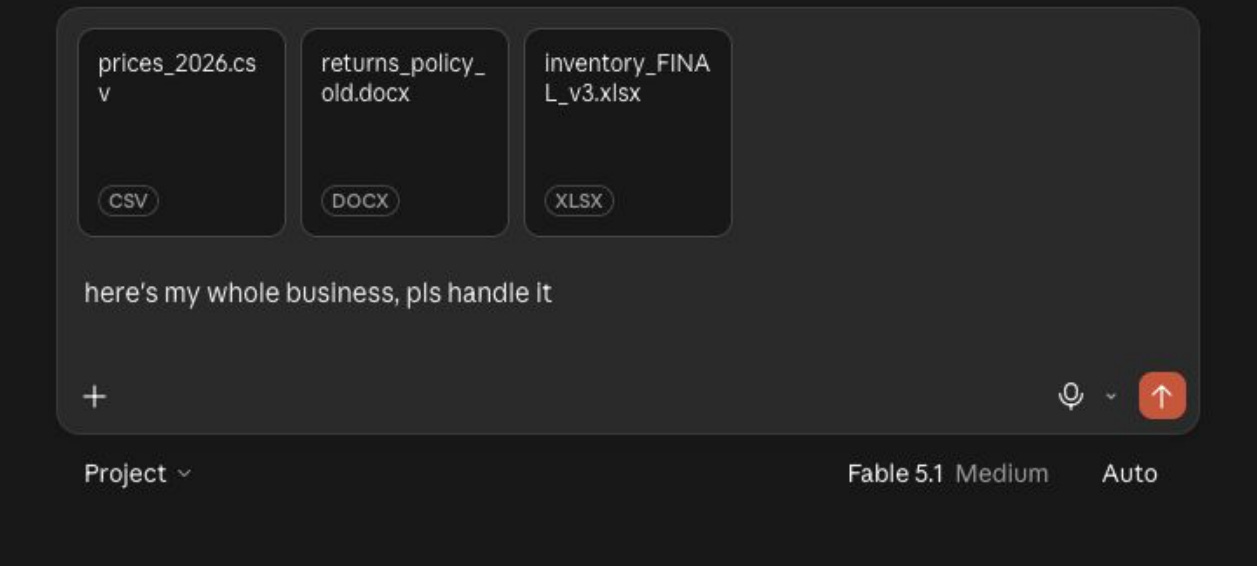
I get it. The people I build for are amazing at their craft and have zero interest in becoming prompt engineers.
So it starts small. The AI answers one customer email all good. Then it’s answering all of them. And every time it messes up, the owner corrects.
“Always use this”
“Never use that”
“IMPORTANT: do this, don’t do that”
I call this prompt stacking. It feels like progress. Every new line kinda works. Mistakes are reduced, but it’s never guaranteed that it will not make one.
Isn’t it crazy that you’re asking something built on probability to please be certain.

And this is happening at scale. Salesforce surveyed over 3,000 service professionals this spring and found that 66 percent of service organizations now use AI agents, up from 39 percent a year earlier.
Customers aren’t following. In a Gartner survey of more than 3,500 customers, only 7 percent used a chatbot in their latest support interaction, even though 49 percent said they would have if one was offered. And 87 percent said that when a company uses AI for support, a way to reach a human is essential.
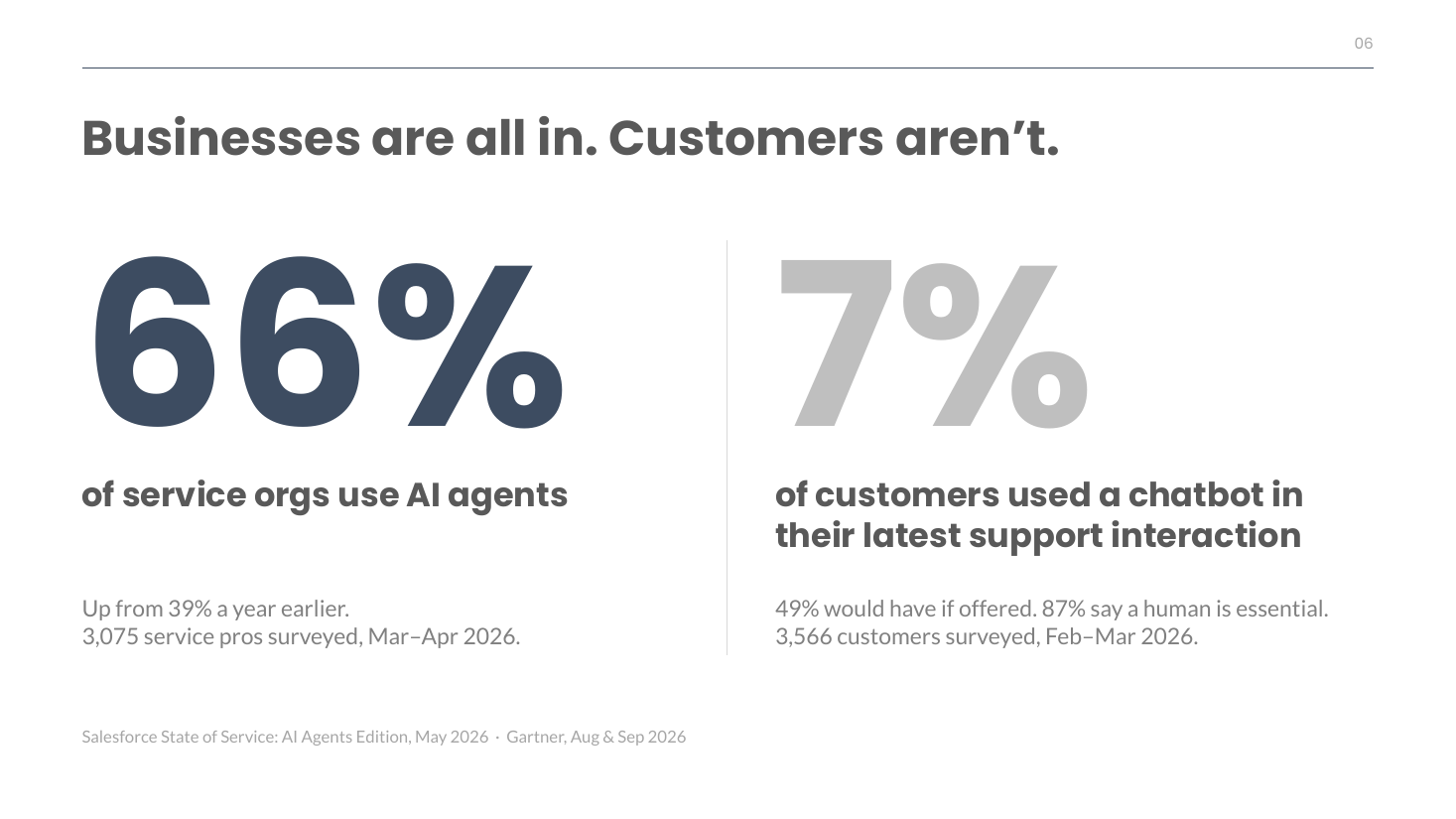
We’re building these things faster than ever and customers are walking around them.
What do we do?
If hope isn’t a system what is?
It’s knowing where intelligence should be placed and what belongs in a prompt.
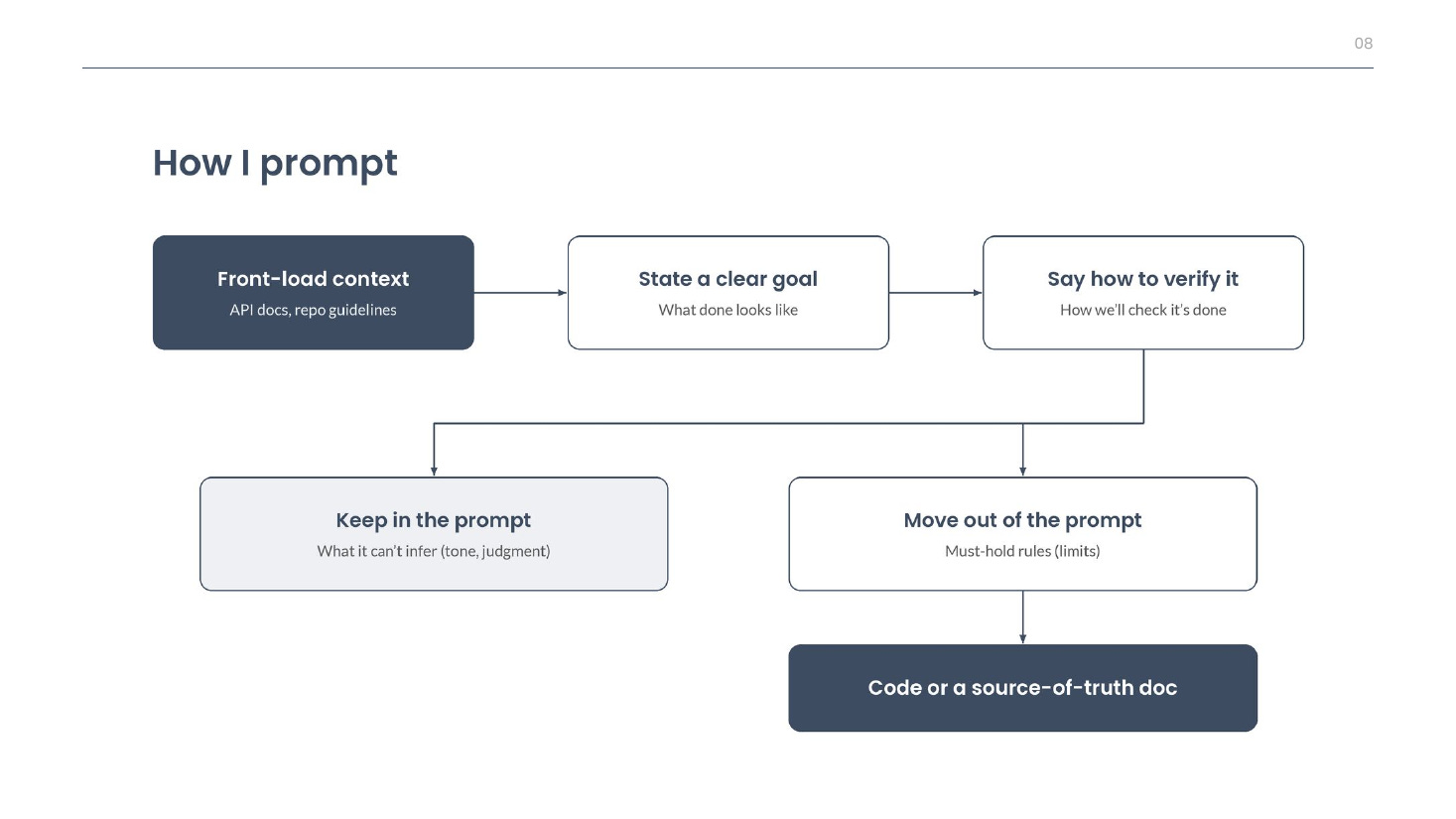
Generally this is how I prompt:
Front-load context. Whatever it needs to know before it starts: the docs, the guidelines, your policies.
State a clear goal. What does done look like?
Say how to verify it. How will we check it’s actually done?
I iterate, do some corrections, etc etc.
Then I sort what’s left.
Keep in the prompt: what the model can’t infer on its own, like tone and judgment.
Move out of the prompt: the must-hold rules and limits. Those go into code, or into one source-of-truth doc the agent looks up.
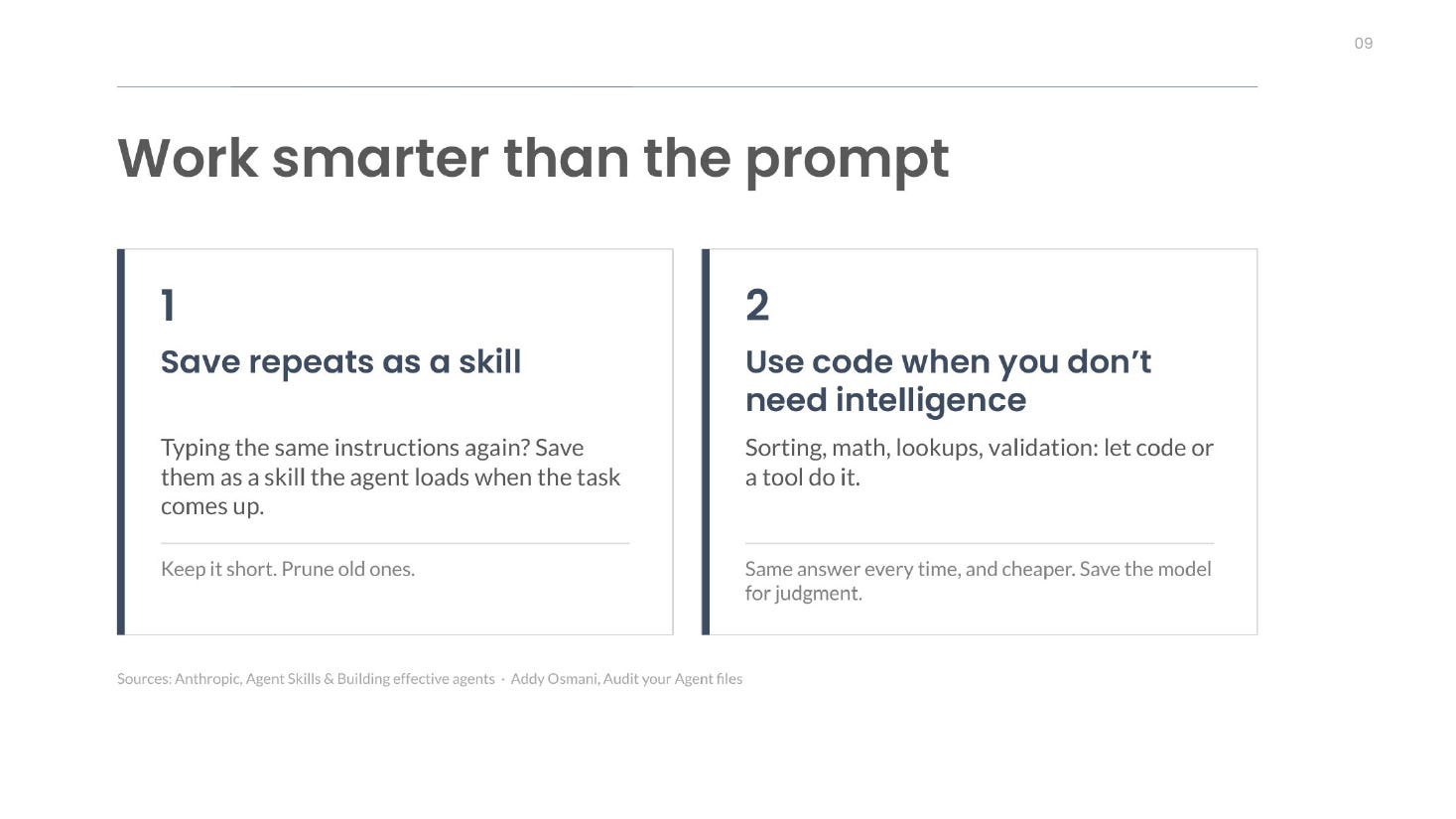
Save repeats as a skill. If you keep typing the same instructions, save them as a skill: instructions the agent loads only when that task comes up.
Use code when you don’t need intelligence. Sorting, math, lookups, validation. Let code or a tool do it. It gives the same answer every time, and it’s cheaper.
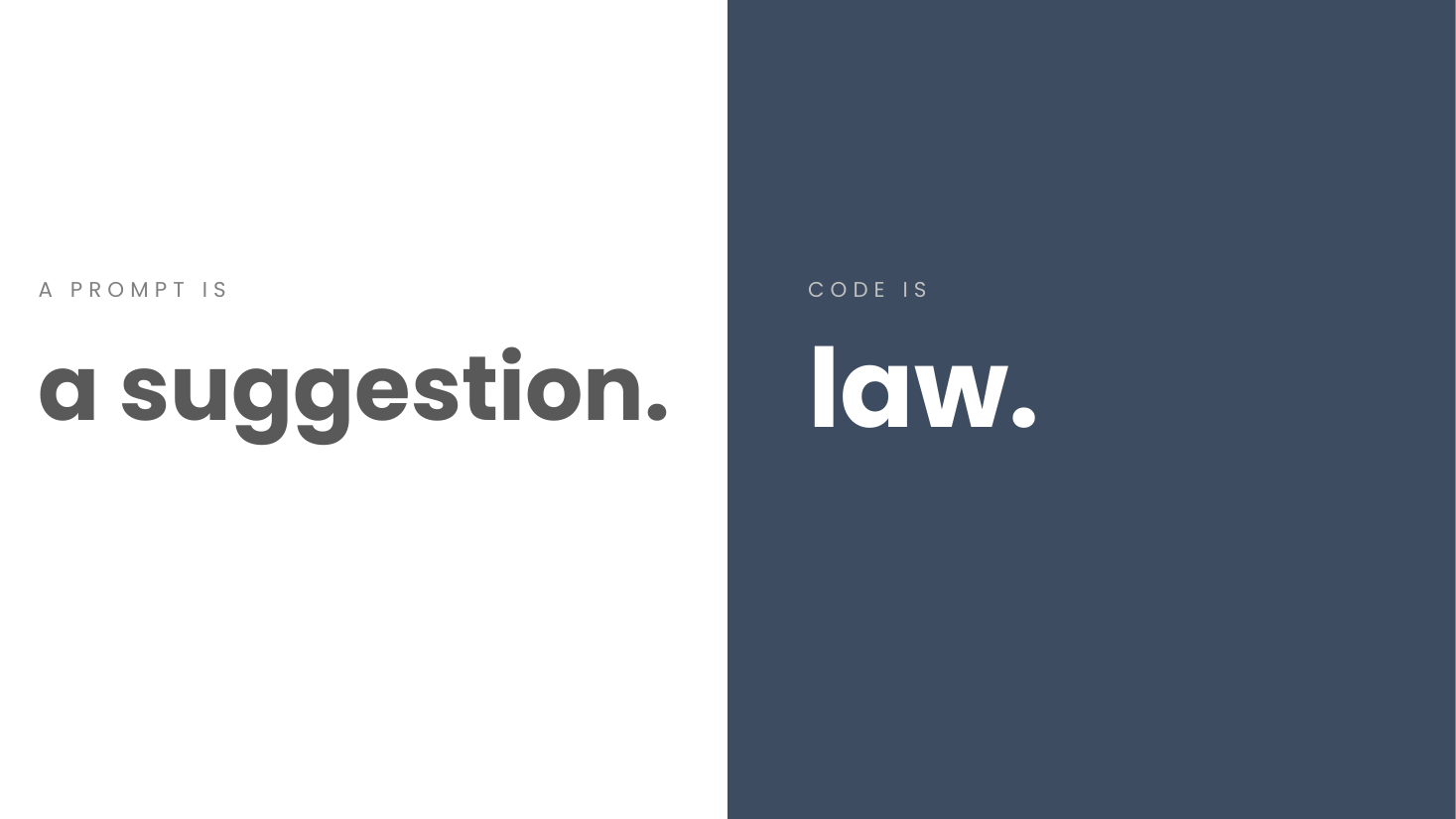
Results from a prompt is non-deterministic. It can change every time. We cannot be certain.
What’s written in code is there.
Workflow evaluation for chatbot:
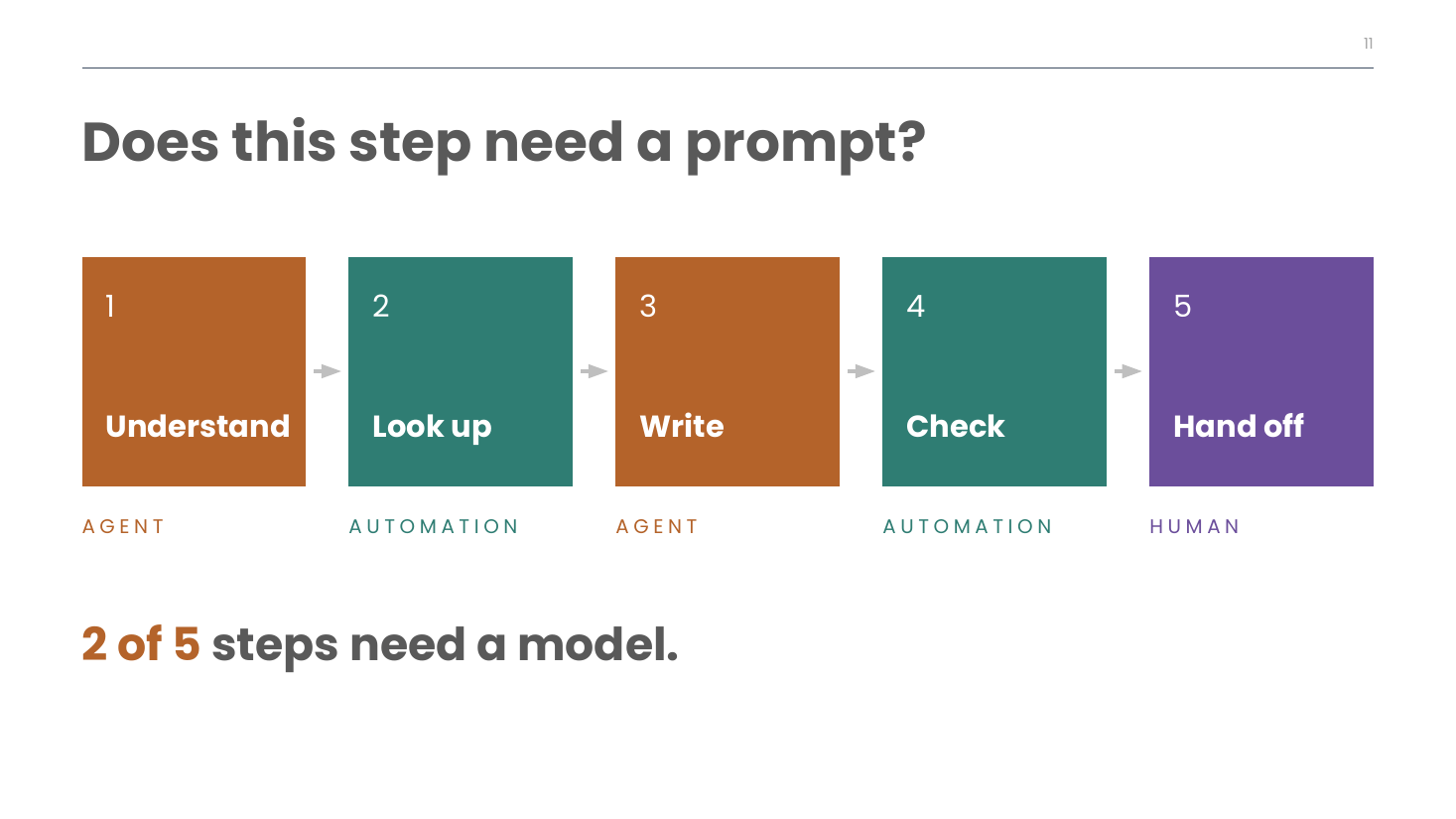
For every step, ask: does this step need a prompt?
Understand (AI). Customers write messy stuff: “hey my ring came and it’s the wrong size and I need it by friday??” Working out that this means “exchange, with a deadline” is real judgment.
Look up (automation). The return window, the order date, the price. One right answer, straight from your records. The model can ask for a fact. It can’t make one up.
Write (AI). Turn the facts into a reply that sounds human and sounds like you.
Check (automation). Before anything sends, code compares the reply to the facts. Any date, price, or yes/no on a policy that doesn’t match gets blocked.
Hand off (human). One tap away, with the whole conversation, so nobody repeats themselves.
AI, code, AI, code, human. Two of five steps need a model.
And when you’re ready to let go of the busywork don’t trust it on day one. Read every reply at first, and only step back once the checks are catching the mistakes.
Call to Action
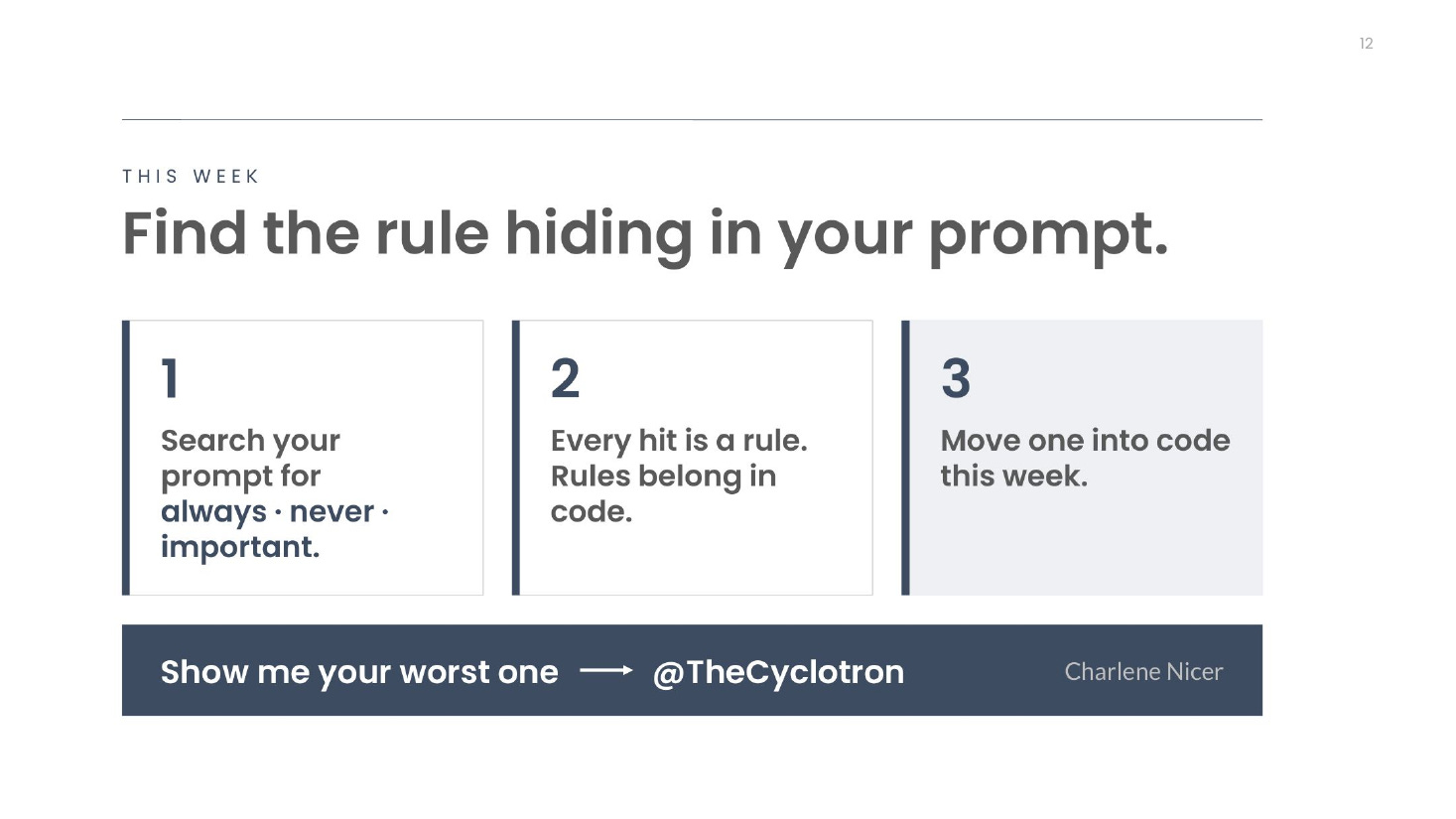
Find the rule hiding in your prompt.
Search your prompt for always, never and important.
Every hit is a suspect. Ask: is this tone, or is it a rule? Rules belong in code.
Move one into code this week. Just one.
Remember those six assistants? They threw everything they had at a deadline. 187 emails, legal threats, 152 chargeback requests. And the deadline won. Not because someone wrote a better prompt. Because it was a rule.
Not everything needs a prompt. So before you write the next one, pause and ask: does this actually need one?
Show me your worst prompt: I’m @TheCyclotron.
Sources
Vals AI, How Far Will AI Assistants Go for a Refund They Can’t Get?
Gartner, Sept 2, 2026: only 27% of customers would try a chatbot again after a negative experience
Gartner, Aug 4, 2026: 87% say companies using GenAI must provide access to a human
NYC Department of Consumer and Worker Protection, Oct 20, 2026